Leave Your Message

Which Is the Best China Aluminum Machine Supplier?

Choosing the best China Aluminum Machine supplier requires more than comparing catalog prices. It demands evidence from production, engineering, service, and delivery performance. The International Aluminium Institute reported global primary aluminium production above 70 million tonnes annually in recent years. China remains the dominant producer, creating a deep manufacturing base for extrusion presses, CNC equipment, cutting systems, and automated fabrication lines.

Scale matters, but it does not guarantee quality. The USGS Mineral Commodity Summaries 2025 identifies China as the world’s leading aluminium producer and consumer. This position supports strong supplier ecosystems, skilled technicians, and broad component availability. However, buyers should examine measurable details. Ask for machine accuracy records, motor brands, safety certifications, load-test videos, and documented factory references. A reliable supplier should explain tolerances clearly, not hide behind impressive photographs.

The best supplier depends on the application. A window manufacturer may prioritize extrusion stability and energy efficiency. An aerospace workshop may require tighter tolerances, traceability, and advanced CNC control. A smaller fabricator may value training and spare-parts access more than maximum speed.

Look closely.

Industry reports provide useful context, yet supplier claims still need verification. Request a live factory inspection, sample-production test, and written after-sales response time. The China Machine Tool Industry Association has repeatedly emphasized automation, precision, and intelligent manufacturing as key industry directions. Still, no supplier is perfect. Lead times can change, software support may vary, and a low initial quote can conceal installation costs. This guide compares China Aluminum Machine suppliers through practical, documented criteria, helping buyers make a more defensible decision.
Which Is the Best China Aluminum Machine Supplier?

What Defines an Aluminum Machine Supplier in China’s 43 Mt Primary-Aluminum Market?

Which Is the Best China Aluminum Machine Supplier?

In a market producing roughly 43 million tonnes of primary aluminum, scale alone proves little. The International Aluminium Institute places China among the world’s largest aluminum producers, while the U.S. Geological Survey tracks its dominant role in global output. This market demands more than catalog equipment. A qualified supplier should understand melting, casting, extrusion, rolling, and scrap recovery as connected production stages.

Numbers matter. Look for verified capacity, measured energy use, and documented machine availability. A serious supplier can provide furnace temperature records, casting-speed data, tolerance reports, and factory acceptance-test procedures. It should also explain how equipment performs with different alloys, billet sizes, and recycled feedstock. The International Energy Agency repeatedly identifies energy intensity and emissions as major issues for heavy industry. Therefore, motor efficiency, heat recovery, process control, and maintenance access deserve direct questions.

Experience appears in small details. Can technicians diagnose vibration from a gearbox? Can they deliver critical spare parts before a shutdown? Can the control system export useful production data? Machines age. A supplier may still miss a delivery or underestimate installation time; honest risk disclosure is better than polished promises. Independent inspections, traceable materials, clear warranties, and documented safety compliance strengthen reliability. The best choice is not automatically the lowest quotation. It is the supplier whose engineering evidence survives a busy aluminum plant.
Which Machine Type Fits Your Process: Extrusion, CNC, Casting, or Anodizing?

Choosing the Best China Aluminum Machine Supplier Starts with Your Process

The right machine depends on the shape, finish, and production volume you need. Aluminum extrusion works well for long profiles, such as window frames, rails, and heat sinks. It pushes heated billets through a shaped die. Ask suppliers for pressure data, temperature control details, and sample profiles from similar alloys.

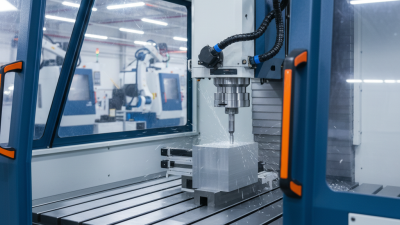
CNC machining suits precise parts with drilled holes, milled surfaces, and tight tolerances. It may waste more material than extrusion, but it offers flexible design changes. Casting fits complex shapes and larger components. However, porosity, shrinkage, and surface marks require careful inspection. A supplier should explain mold life, alloy selection, and testing procedures clearly.

Anodizing is different. It is a surface treatment, not a forming method. It improves corrosion resistance and creates a controlled appearance after machining or extrusion. Check thickness consistency, color matching, sealing quality, and sample approval methods. In real projects, machine capacity can look impressive on paper but perform poorly under continuous production. I have seen buyers focus on price and overlook maintenance access, operator training, spare parts, and factory inspection records. That choice can become expensive. Request trial runs, dimensional reports, energy data, and realistic delivery schedules before purchasing. Some suppliers provide excellent technical documents, yet their communication becomes slow after payment. This risk deserves attention.

Which Is the Best China Aluminum Machine Supplier? — Which Machine Type Fits Your Process: Extrusion, CNC, Casting, or Anodizing?
Machine Type Primary Process Typical Aluminum Products Common Material Forms Typical Production Scale Key Technical Parameters Best Fit for Your Process Main Advantages Main Limitations Supplier Evaluation Priorities
Aluminum Extrusion Press Forcing a heated aluminum billet through a shaped die to create a continuous profile. Window and door profiles, heat sinks, rails, tubes, structural sections, and industrial frames. Aluminum billets, commonly in wrought alloy families such as 6xxx series. Continuous production; suitable for medium- to high-volume profile manufacturing. Press force commonly ranges from approximately 600 to 5,000 metric tons; billet diameter, container size, extrusion speed, die size, and run-out-table length are critical. High for long, uniform cross-sections. High material utilization, repeatable profiles, efficient automation, and strong suitability for long products. Requires dedicated dies; less suitable for complex three-dimensional parts or frequent low-volume design changes. Press rigidity, hydraulic control, billet-heating system, die oven, puller, cooling table, saw, automation, safety systems, and after-sales service.
Aluminum CNC Machining Center Removing material with computer-controlled milling, drilling, tapping, turning, or routing tools. Brackets, housings, manifolds, plates, precision components, prototypes, and low-volume customized parts. Extruded profiles, plates, bars, billets, and cast blanks. Prototype, small-batch, and medium-volume production; often used where design flexibility is important. Three-, four-, or five-axis configuration; spindle speed, travels, tool capacity, workholding, positioning accuracy, and chip evacuation affect performance. High for complex geometries and tight-tolerance parts. Excellent flexibility, fast design changes, accurate features, and no profile die investment. Material is removed as chips; cycle time and tooling cost can increase for large parts or high-volume production. Machine rigidity, backlash control, thermal stability, controller, spindle performance, probing, workholding, CAM compatibility, and operator support.
Aluminum Die-Casting Machine Injecting molten aluminum alloy into a reusable metal die under pressure. Motor housings, pump bodies, gear cases, automotive components, appliance parts, and thin-wall enclosures. Aluminum casting alloys supplied as ingots or controlled remelt feedstock. Medium- to high-volume production with repeatable part geometry. Clamping force commonly ranges from approximately 160 to 2,000 metric tons; shot speed, injection pressure, die size, cycle time, and vacuum capability are important. High for complex near-net-shape parts at volume. Fast cycle times, reduced machining requirements, thin-wall capability, and consistent repeatability after process optimization. High tooling cost, design constraints related to draft and wall thickness, and possible porosity or heat-treatment limitations. Injection system, clamping rigidity, vacuum system, die-temperature control, metal-quality management, safety, spare parts, and process engineering.
Aluminum Anodizing Line Electrochemically forming a controlled oxide layer on aluminum surfaces for protection, appearance, or functional performance. Architectural profiles, consumer products, electronic housings, decorative panels, and corrosion-resistant components. Clean aluminum parts or profiles; alloy composition and surface condition influence the final finish. Batch or continuous finishing; suitable for medium- to high-volume surface-treatment operations. Tank dimensions, rectifier current and voltage, bath chemistry, treatment time, temperature control, rinsing, sealing, and wastewater management are essential. High when surface durability, color, and corrosion resistance are required. Improves surface hardness and corrosion resistance while offering clear, colored, or decorative finishes. Does not create the basic part geometry; finish uniformity depends on alloy, pretreatment, racking, bath control, and cleaning. Rectifier quality, bath filtration, temperature and chemical monitoring, exhaust ventilation, wastewater treatment, automation, and environmental compliance.
Aluminum Profile Sawing and Cutting System Cutting extruded profiles, bars, or tubes to specified lengths and miters. Frame components, window and door sections, furniture parts, rails, and assembly kits. Extruded profiles, tubes, bars, and other preformed aluminum sections. Small- to high-volume cut-to-length production, depending on automation and material handling. Saw-blade diameter, cutting angle range, feed speed, length accuracy, clamping method, nesting capability, and automatic loading or unloading. High for accurate length preparation after extrusion. Fast repeatable cutting, clean miters, reduced manual handling, and easy integration with assembly lines. Limited to cutting operations; burrs, blade wear, and profile deformation must be controlled. Cutting accuracy, blade selection, dust and chip extraction, servo positioning, safety guarding, software, and maintenance access.
Aluminum Melting and Holding Furnace Melting aluminum feedstock and maintaining a stable temperature before casting or other downstream operations. Cast billets, die-cast components, gravity-cast parts, and remelt operations. Aluminum ingots, certified recycled scrap, returns, and alloying additions managed under process controls. Batch or continuous melting; selected according to throughput and alloy-change frequency. Capacity, melting rate, fuel or electrical heating method, temperature uniformity, energy consumption, dross management, and metal-transfer system. Medium as a standalone machine; essential as part of a casting process. Supports controlled melt availability, alloy preparation, and improved production continuity. Requires strict safety procedures, alloy segregation, melt-quality testing, and environmental controls. Thermal efficiency, temperature accuracy, refractory quality, emissions control, crucible or pump design, safety interlocks, and service support.
Selection principle: choose extrusion for continuous profiles, CNC machining for flexible precision parts, die casting for high-volume near-net-shape components, and anodizing for engineered or decorative surface finishing. In many factories, these technologies are combined rather than used as alternatives.

How Do Press Tonnage, ±0.05 mm Accuracy, and Energy Use Compare?

Which Is the Best China Aluminum Machine Supplier?

Press tonnage should match the aluminum part, not marketing claims. A practical estimate considers projected area, alloy strength, forming method, and safety margin. A 200 cm² component requiring 5 tons per cm² could approach 1,000 tons before adjustment. That figure is only a starting point. Die design and material flow can change the real requirement.

Accuracy needs equal scrutiny. A supplier promising ±0.05 mm should provide inspection results, calibration records, and test conditions. ISO 230-2 evaluates positioning accuracy for machine tools, but factory temperature, tool wear, and operator settings still affect results. I would not accept ±0.05 mm at face value. It is a specification, not a guarantee. Ask for repeatability data across several production cycles.

Energy use is easier to compare when measured per finished part. The International Energy Agency reported that industry used about 37% of global final energy in 2022. For aluminum equipment, compare motor power, idle consumption, cycle time, and measured kWh per component. Servo-hydraulic systems may reduce idle losses, but their purchase price and maintenance need review. Request a three-shift energy log. One sample is weak evidence. A supplier’s best machine may not be its most economical machine.

Do ISO 9001, CE, and GB Standards Verify Supplier Quality and Safety?

Which Is the Best China Aluminum Machine Supplier?

ISO 9001, CE, and GB standards can reveal important details about a supplier. However, they do not prove everything. ISO 9001 shows that a company follows a documented quality management system. It does not guarantee perfect machines or zero defects. Check the certificate scope, registration number, issue date, and covered factory address.

CE marking concerns applicable European safety and conformity requirements. It is not always a third-party quality certificate. Ask for the declaration of conformity, risk assessment, and relevant test reports. GB standards apply to specific products and safety conditions in China. Request the exact standard numbers, not a general compliance statement. This small detail matters.

The paperwork looked complete.

Look beyond certificates. During a factory audit, inspect material storage, machining accuracy, electrical cabinets, and final testing records. Ask how aluminum profiles are traced from delivery to assembly. Reliable suppliers can show calibration records and explain how they handle rejected parts. Request a production sample before placing a large order. Measure its cutting accuracy, surface finish, noise, and emergency-stop response.

Yet one supplier could not explain its test method clearly. That was a warning. Certificates can become outdated, limited, or misunderstood. I would also compare contract terms, spare-parts support, installation guidance, and response times. A capable supplier welcomes technical questions and accepts measurable inspection criteria. My judgment could still be wrong, so independent pre-shipment inspection remains a practical safeguard.

How Should Warranty Terms, Spare Parts, and Total Cost Decide the Best Supplier?

Which Is the Best China Aluminum Machine Supplier?

The best China aluminum machine supplier is not always the one offering the lowest quotation. A practical factory audit should examine warranty coverage, response time, spare-part access, and operating cost. Warranty language matters. Ask whether it covers motors, control systems, tooling, labor, freight, and commissioning defects. A twelve-month warranty is weak if exclusions cover the parts most likely to fail. Require written repair timelines and escalation contacts. I have seen low-cost equipment become expensive when one imported sensor stops production for ten days.

Total cost needs more than purchase price. Include energy, tooling wear, maintenance labor, training, shipping, installation, and downtime. The International Energy Agency reports that industry consumes about 37% of global final energy. Efficient drives and heating systems can therefore influence long-term cost significantly. The U.S. Department of Energy also identifies motor systems as major industrial electricity users. Ask for measured energy data from comparable aluminum lines, not only catalogue estimates. Cheap quotes mislead. Even supplier calculations may be imperfect.

Tips: Request a three-year total-cost worksheet and a critical-spares list. Confirm part numbers, storage conditions, lead times, and local service capability. Keep at least one tested sensor, relay, and sealing kit on site. Check reference factories with similar profiles and inspect maintenance records. A supplier that openly documents failures may be more reliable than one promising zero problems. Evaluate warranty extensions carefully; some protect uptime, while others only extend paperwork.