Why Choose Vertical Machine for Your Industrial Needs?
In the rapidly evolving landscape of industrial manufacturing, the choice of equipment plays a critical role. Vertical machines have emerged as a go-to solution for many industries. According to Dr. Emily Chen, a leading expert in industrial automation, “Vertical machines offer unparalleled precision and efficiency, essential for today’s competitive market.”
These machines stand out due to their compact design and ability to optimize space. They minimize the footprint while maximizing output. This combination addresses the challenges of modern manufacturing environments. Businesses looking to enhance productivity should consider the unique advantages provided by vertical machines. However, the transition demands careful planning and potential reevaluation of existing workflows.
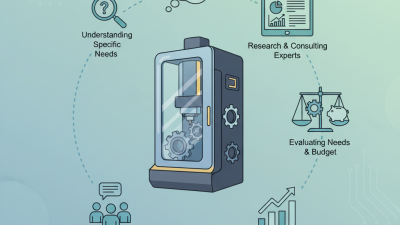
The investment in vertical machines is significant, but the returns can be substantial if implemented correctly. The key lies in understanding the specific needs of your operation. While vertical machines present opportunities, they also come with challenges that require thoughtful implementation and training. Embracing these machines could redefine operational standards, but one must proceed with caution and clarity.
Advantages of Vertical Machines in Industrial Applications
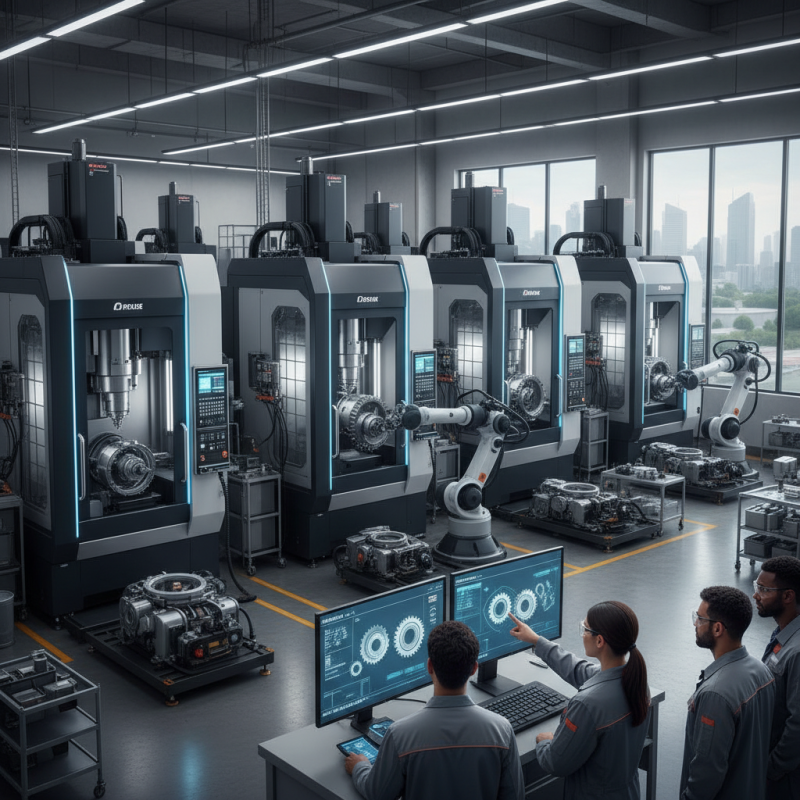
Vertical machines have emerged as a cornerstone in various industrial settings. Their design allows for efficient operations, especially in limited spaces. This advantage translates into smoother workflows and enhanced productivity. Industries benefit significantly from the compact nature of vertical machines.
Tips: Ensure proper alignment during setup. Misalignment can lead to operational inefficiencies.
Another key benefit is the precision these machines offer. Vertical machining centers can achieve tighter tolerances, crucial for industries such as aerospace or medical equipment. The vertical orientation often minimizes the risk of workpiece deformation during machining. This characteristic leads to higher quality outcomes.
Tips: Regularly calibrate your machine. This ensures continued accuracy over time and can save costs in the long run.
Despite these advantages, vertical machines are not without their challenges. Their reliance on gravity means that some operations may be limited compared to horizontal machines. Operators must carefully consider their specific needs when choosing the right equipment.
Tips: Analyze your production requirements before making a decision. This reflection helps in selecting the most suitable machine for your projects.
Key Industry Statistics Highlighting Vertical Machine Efficiency
Vertical machines are increasingly recognized for their efficiency across various industrial sectors. According to the latest industry reports, vertical machining centers can achieve cycle time reductions of up to 30%. This efficiency is largely due to reduced setup times and the ability to machine multiple faces of a part in one operation.
Moreover, a study by a recognized manufacturing research group found that vertical machines have a higher material removal rate. Specifically, these machines can remove metal at rates of 200 to 300 inches per minute. This performance not only improves productivity but also impacts the overall cost-effectiveness of manufacturing processes.
However, not all vertical machines are created equal. Some industries may find that specific models do not meet their operational requirements. It's essential for companies to analyze their unique demands before investing. A tailored approach helps in selecting the right equipment, ensuring long-term efficiency in production lines. Failure to assess these variables might lead to inadequate performance and increased operational costs.
Comparison of Vertical vs. Horizontal Machines in Manufacturing
When comparing vertical and horizontal machines in manufacturing, several factors come into play. Vertical machines often provide distinct advantages in terms of space efficiency and ease of operation. According to a report by the Association for Manufacturing Technology, vertical machining centers (VMCs) are more suitable for smaller parts. They allow for easy access to the cutting area, enhancing operator convenience.
On the other hand, horizontal machines excel in handling larger components and offer improved chip removal. A study published by the National Association of Manufacturers highlights that horizontal machining centers (HMCs) typically yield greater productivity for high-volume production runs. However, they often require more floor space and can be costlier to maintain.
There is no universal answer to which machine type is better; it largely depends on specific production needs. Both vertical and horizontal machines have their weaknesses. For small batch sizes, vertical machines may struggle with efficiency. Conversely, HMCs might not be the best choice for shops with limited space. Evaluating these aspects helps manufacturers make informed decisions tailored to their individual requirements.
Why Choose Vertical Machine for Your Industrial Needs? - Comparison of Vertical vs. Horizontal Machines in Manufacturing
| Feature |
Vertical Machine |
Horizontal Machine |
| Tool Access |
Excellent for complex shapes |
Good for simple parts |
| Space Efficiency |
Takes up less floor space |
Requires more floor space |
| Cost |
Generally lower initial investment |
Higher initial investment |
| Setup Time |
Quicker for one-off jobs |
Longer due to complexity |
| Maintenance |
Easier to maintain |
More challenging maintenance |
| Applications |
Ideal for R&D and low-volume production |
Best for high-volume production |
Vertical Machine Cost-Benefit Analysis for Businesses
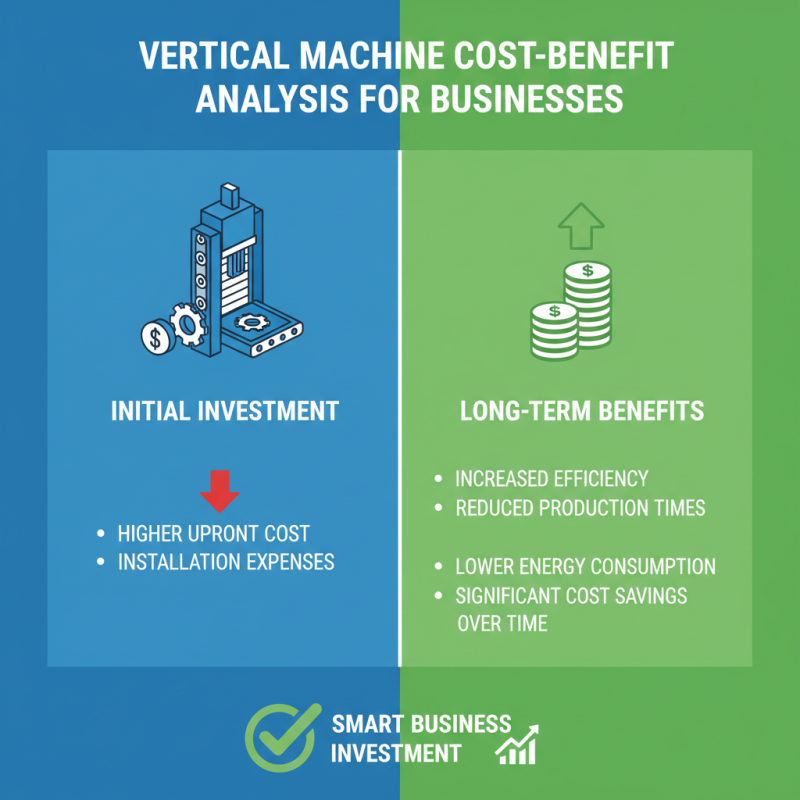
When considering vertical machines for industrial applications, a cost-benefit analysis is crucial. These machines often come with a higher initial investment. However, they can lead to significant long-term savings. The efficiency of vertical machines often surpasses that of traditional models. They can reduce production times and lower energy consumption. Over time, this can result in impressive cost reductions for businesses.
Operational efficiency is just one aspect. Maintenance costs are also a factor. Vertical machines usually require less routine maintenance. This means reduced downtime and fewer disruptions in production. Businesses must weigh these benefits against the initial expenditure. It’s not always easy to justify the upfront costs. A thorough analysis can help in making informed decisions.
Moreover, the training required for operators may be a consideration. Employees need to adapt to new technologies. This adaptation period can incur additional costs. However, once operators are trained, productivity can increase. Focusing on the bottom line is essential. Yet, it’s important to recognize potential challenges. Each business must evaluate its unique needs to determine if vertical machines are the right choice.
Future Trends in Vertical Machine Technology and Innovation
Vertical machine technology is rapidly evolving, addressing industrial demands effectively. Innovations focus on enhanced precision and efficiency, crucial for competitive industries. Manufacturers are exploring new materials and processes to improve durability and performance. These advancements enhance user experience and operational capabilities.
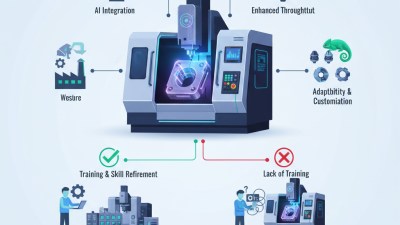
Automation is a key trend in vertical machine development. Integrating AI and machine learning creates smarter operations. Machines become more intuitive, optimizing workflows and reducing human error. However, reliance on technology raises questions about workforce displacement and skills gaps.
Sustainability is another growing concern. The focus on environmentally friendly practices is shaping future developments. Eco-efficient designs aim to reduce waste and energy consumption. While these efforts are promising, challenges in implementation remain. Balancing cost and sustainability is a dilemma many companies face.