How to Choose the Right Three Axis CNC Machine for Your Projects?
Choosing the right Three Axis CNC Machine can seem daunting. With so many options available, how do you know which one fits your project? According to John Smith, an industry expert with over 20 years of experience, "The right machine can transform your workflow." His insight emphasizes the importance of selecting the right tool for your needs.
A Three Axis CNC Machine offers precision and versatility. However, not all machines are created equal. Features like size, spindle speed, and control systems vary significantly. Evaluating these factors can be overwhelming. It's crucial to reflect on your specific requirements to make an informed choice.
Every project has unique demands. Some machines excel in speed, while others offer finer detail. Understanding your priorities is key. Often, users settle for machines that may not meet their long-term needs. By taking time to research, you can ensure you select a Three Axis CNC Machine that enhances your production quality and efficiency. Embrace the challenge; it will pay off in the end.
Understanding Different Types of Three Axis CNC Machines
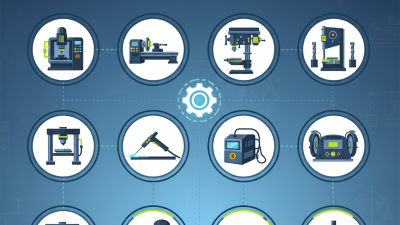
Choosing the right three-axis CNC machine can be daunting. To simplify the process, understanding the different types is crucial. There are primarily three categories: hobbyist models, industrial-grade machines, and specialized CNC routers, each with distinct features. Hobbyist models are user-friendly, ideal for small projects and beginners. They usually offer lower precision and speed. Industrial machines, on the other hand, provide durability and high-performance capabilities for extensive work. Specialized routers excel in specific tasks like engraving or milling, making them invaluable for targeted projects.
Tips: Consider your project's size and complexity. A hobbyist model might suffice for simple tasks like signage. For intricate designs, you may need an industrial-grade machine.
When examining machines, look for specifications such as spindle speed and cutting depth. Higher speeds can enhance efficiency, but ensure they align with material capabilities. Reflect on your workspace as well; larger machines require more area and power supply considerations.
Tips: Always check for available support and resources. A machine that is hard to operate or lacks documentation could lead to frustration. Take time to read reviews and experiences from other users; this can provide insight into potential challenges.
Comparison of Different Types of Three Axis CNC Machines
Key Features to Consider When Selecting a CNC Machine
When choosing a three-axis CNC machine, several key features must be evaluated. First, consider the machine's build quality and rigidity. A sturdy frame reduces vibrations, leading to improved precision. According to a report by the International Federation of Robotics, machines with enhanced structural integrity can increase operational accuracy by up to 30%.
Next, assess the spindle speed and power. The spindle's capabilities affect material compatibility and machining speed. High-speed spindles are crucial for faster cuts, especially with softer materials. Studies suggest CNC machines with spindle speeds exceeding 20,000 RPM can enhance productivity by 25%.
Tooling options also play a critical role. The machine's capacity for various tool sizes impacts versatility in projects. Machines with a broad range of compatible tools allow users to explore diverse applications, though they may require additional setup time. Therefore, the challenge lies in balancing versatility with efficiency.
Lastly, consider the control software. User-friendly interfaces can significantly reduce the learning curve for operators. However, if the software lacks advanced features, it might hinder complex project execution. Making informed choices about these features is essential for optimizing operations and achieving desired results.
Evaluating Your Project Requirements and Material Types
Choosing the right three-axis CNC machine requires a deep understanding of your project requirements. Consider the types of materials you will work with. Soft materials like wood or foam require less power than metals. Different materials also determine the type of tooling you need. Tooling can greatly affect the finish and accuracy of your projects.
Another factor to consider is the complexity of your designs. Simple projects may not require advanced features, while intricate designs do. If your projects involve multiple layers or detailed cuts, a more capable CNC machine is essential. Many users have faced challenges when their machines lacked the precision needed for complex designs.
Think about production volume too. Are you working on one-off projects or mass production? A machine ideal for occasional use may not sustain the demands of high-volume work. Reflecting on these factors ensures that you choose a machine that aligns with your needs. Adapting your choice based on such reflections can lead to better outcomes in your CNC work.
How to Choose the Right Three Axis CNC Machine for Your Projects?
| Project Type |
Material Type |
Cutting Speed (mm/min) |
Precision (mm) |
Machine Size (mm) |
| Woodworking |
Plywood |
2000 |
0.1 |
600x900 |
| Metal Fabrication |
Aluminum |
1500 |
0.05 |
800x1200 |
| Prototyping |
Acrylic |
3000 |
0.02 |
400x600 |
| Sign Making |
PVC |
2500 |
0.1 |
700x1000 |
| Tool Making |
Steel |
1000 |
0.01 |
500x800 |
Budgeting: Costs Associated with Three Axis CNC Machines
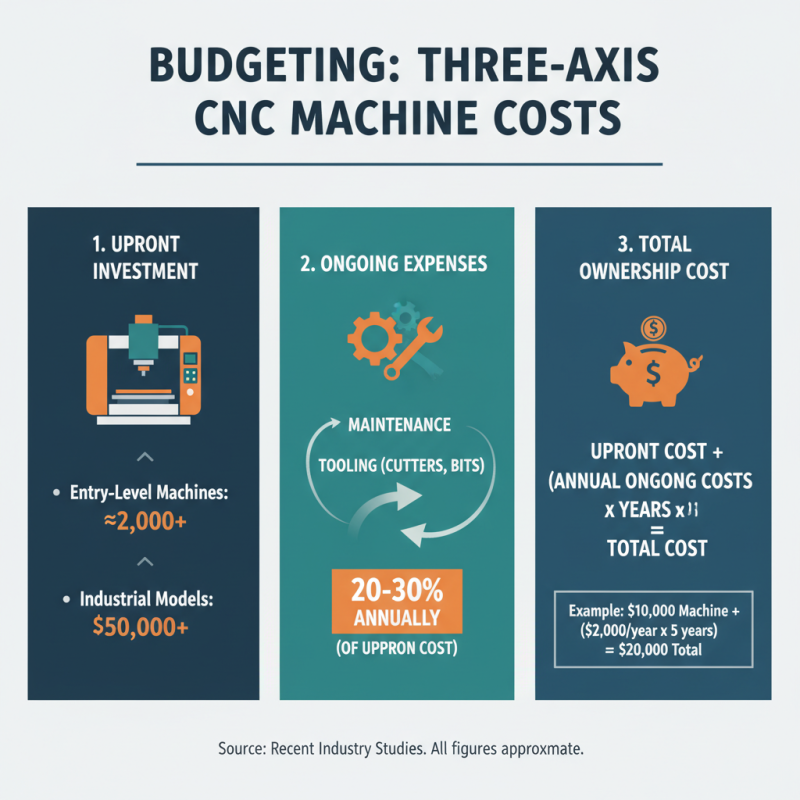
Choosing the right three-axis CNC machine involves understanding the costs associated with these sophisticated tools. Recent studies indicate that entry-level machines can start around $2,000, while robust industrial models can easily exceed $50,000. This wide range often leaves buyers confused. The upfront cost is just the beginning; consider ongoing expenses, such as maintenance and tooling, which can add 20-30% to the overall budget each year.
Additionally, electricity consumption is another critical factor. A three-axis CNC machine can consume up to 5 kWh during operation. If used for 8 hours daily, that translates to considerable monthly electricity costs. Also, training staff to operate these machines is essential. Many companies invest an average of $1,500 on training per employee annually. Recognizing these hidden costs is vital for effective budgeting.
It's important to reflect on these financial aspects before deciding. Some buyers overlook the importance of additional software that may cost about $2,000 annually, which supports design and machining processes. An informed decision requires not only understanding initial costs but also projecting long-term investments. This approach can better align your CNC machine choice with your project needs.
Maintenance and Support for CNC Machines: What to Look For
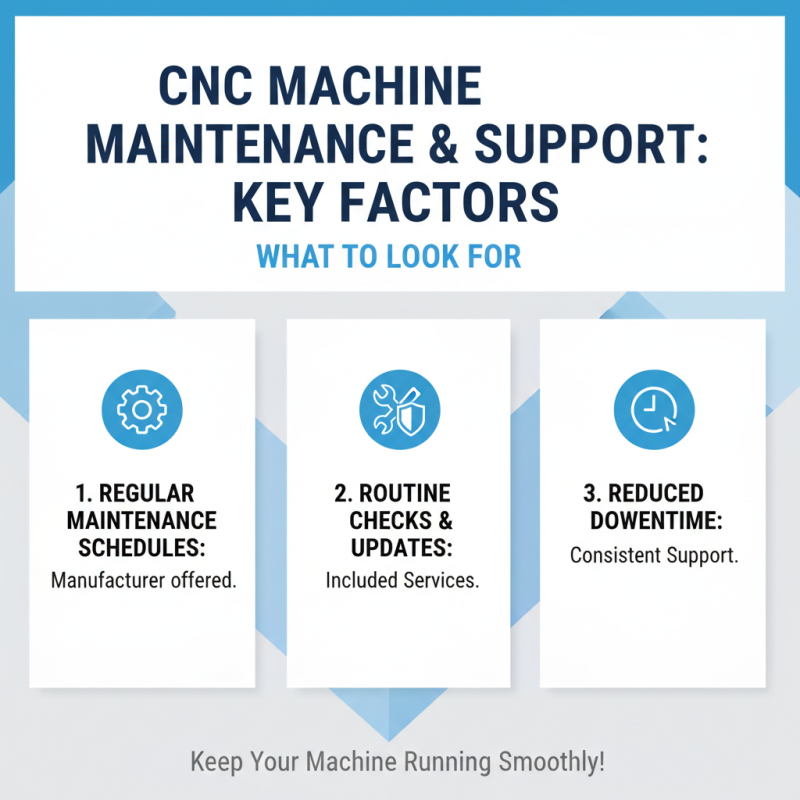
When selecting a three-axis CNC machine, maintenance and support are critical. A reliable support system ensures that you can keep your machine running smoothly. Check if the manufacturer offers regular maintenance schedules. Look for services that include routine checks and timely updates. Consistent maintenance reduces downtime.
Moreover, consider the availability of spare parts. Machines may need repairs, and having easy access to parts is essential. Also, inquire about the support channels provided. A responsive customer service team can be invaluable when facing issues. This assistance should come through multiple platforms—phone, email, or even chat options.
Lastly, think about learning resources. Some companies provide training sessions or workshops. These can help you understand your CNC machine better. Having adequate knowledge leads to better troubleshooting and maintenance. While all this support is vital, remember that not every manufacturer offers the same level of service. Research and evaluate before making a decision.