2026 Top Cnc Machining Equipment Innovations and Trends to Watch?
As we approach 2026, the landscape of CNC machining equipment continues to evolve. Recent industry reports indicate that the global CNC machining market is projected to reach $100 billion by 2026, driven by advancements in technology and increasing demand across various sectors. According to industry expert Dr. Emily Carter, “Innovation in CNC machining equipment will redefine manufacturing efficiency and precision.”
Significant trends are emerging, such as the integration of AI and IoT within CNC systems. These innovations promise to enhance workflow and product quality. However, companies must also confront challenges, including the high costs of new technologies and the need for skilled operators. As an industry grapples with these shifts, businesses must ask themselves if they are prepared to adapt.
The upcoming innovations could improve performance, but they also require reflection on current practices. Embracing these trends will demand not only investment but also a commitment to ongoing education within the workforce. Staying ahead in CNC machining equipment isn’t just about the latest models; it’s about understanding how to use them effectively for lasting success.
Emerging Technologies in CNC Machining Equipment for 2026
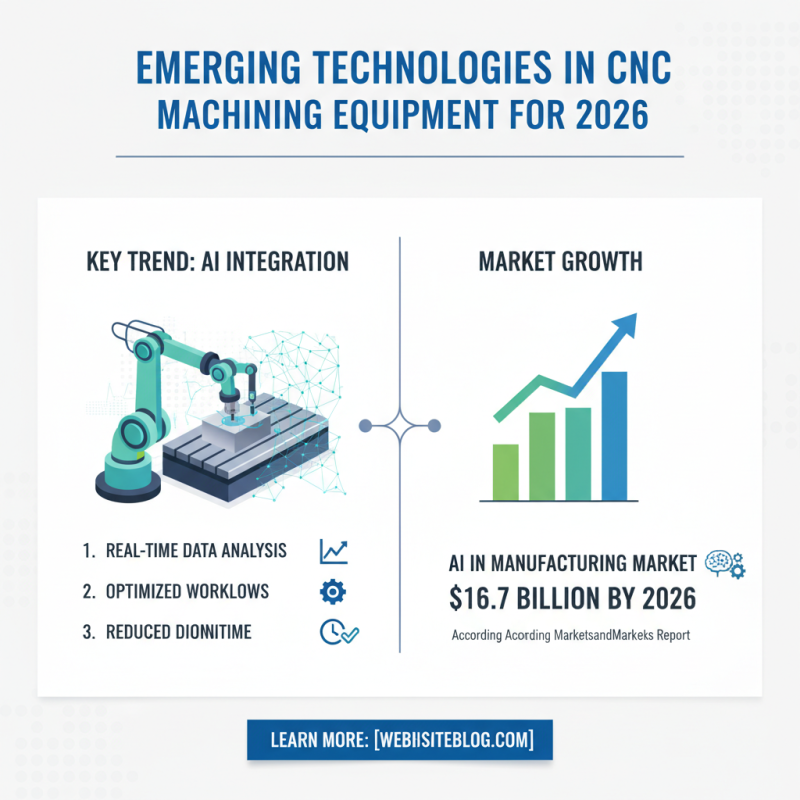
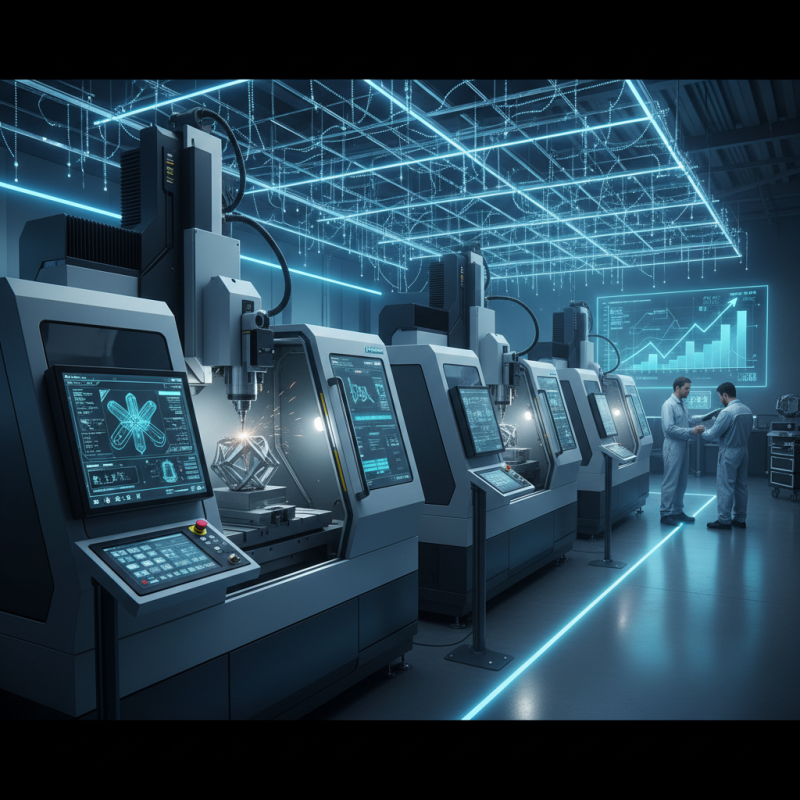
As we approach 2026, several emerging technologies in CNC machining equipment are transforming the landscape of manufacturing. One significant trend is the growing integration of artificial intelligence. AI-driven systems can analyze production data in real-time, optimizing workflows and reducing downtime. According to a report by MarketsandMarkets, the AI in manufacturing market is expected to reach $16.7 billion by 2026, highlighting its pivotal role in CNC machining.
Another noteworthy innovation is the rise of additive manufacturing's synergy with CNC machining. This hybrid method allows for more complex geometries and designs that traditional methods cannot achieve. The 2023 Wohlers Report indicates that the additive manufacturing industry will grow to over $35.8 billion by 2026. However, challenges remain. The blending of these technologies requires skilled operators who understand both machining and additive processes.
Furthermore, advancements in materials are evolving CNC machining capabilities. The introduction of advanced composites and lightweight alloys supports industries aiming for sustainability and efficiency. However, the adoption of new materials presents challenges related to machinability and tooling wear. Continuous research and development are necessary to overcome these hurdles and fully leverage the benefits of these innovations.
Advancements in Automation and Robotics for CNC Machining
The CNC machining landscape is rapidly evolving. Automation and robotics are at the forefront of this transformation.
According to a recent report from the Association for Manufacturing Technology (AMT), over 50% of companies are investing in robotic solutions for CNC applications.
This shift aims to improve efficiency and precision while reducing operational costs.
Today's CNC machines often incorporate advanced robotics for material handling and tool changes.
These technological advancements streamline production processes, which can lead to a 30% increase in productivity.
However, the implementation can be challenging. Many companies struggle with the integration of robotic systems and the necessary training for their workforce.
Not every organization has the resources to adapt quickly.
Moreover, data from a study by McKinsey shows that automation can lead to significant job displacement in traditional roles.
While automation enhances productivity, it also necessitates a workforce that is skilled in operating advanced technology.
This presents an ongoing challenge for businesses and underscores the need for continuous training and development in the machine-tool sector.
Balancing innovation with human resource investment will be critical in navigating the future of CNC machining.
Sustainable Practices and Eco-Friendly Innovations in CNC Equipment
The CNC machining industry is evolving rapidly. A key focus is on sustainable practices, responding to increasing environmental concerns. According to a recent report by Grand View Research, the global CNC machining market is projected to reach $100 billion by 2027. This growth is coupled with a shift towards eco-friendly innovations.
Manufacturers are adopting greener technologies. For instance, dry machining eliminates the need for cutting fluids, reducing waste. More companies are also investing in energy-efficient equipment. The goal is to lower carbon footprints while maintaining productivity. Innovations like recycling scrap materials are making a difference in sustainability efforts.
However, challenges remain. Not all companies prioritize eco-friendly approaches. Adopting new technologies can be costly, deterring smaller firms. Additionally, awareness around sustainable practices varies across the industry. Continuous education and collaboration will be essential to advance eco-friendly CNC solutions. The journey towards sustainability is ongoing and requires commitment from all stakeholders.
Trends in Smart Manufacturing and IoT Integration in CNC Machining
The integration of IoT in CNC machining represents a significant shift in manufacturing practices. This trend enhances machine connectivity and supports real-time data analytics. With smart sensors and embedded systems, machines are becoming more autonomous. They can monitor their performance and detect issues before they escalate. This capability not only reduces downtime but also improves overall efficiency.
Tips: Invest in training for your team. Understanding IoT functionalities can maximize machine capabilities. Regular maintenance checks are crucial for maintaining precision and functionality.
Smart manufacturing empowers operators to harness data effectively. Predictive analytics can forecast maintenance needs, allowing for proactive management. However, integrating these systems is not always seamless. Challenges may arise in data security or interoperability. Businesses should remain aware of these risks and prioritize cybersecurity.
Tips: Start small with IoT integrations. Test new technologies on a few machines before a full-scale rollout. Encourage feedback from operators to identify areas needing improvement.
Future of Customization and 3D Printing in CNC Technologies
The future of customization in CNC technologies is rapidly evolving. As 3D printing becomes more integrated with CNC machining, we see significant changes. This integration enhances the ability to create complex designs quickly and efficiently. Customization allows manufacturers to tailor products to specific needs.
3D printing offers unique advantages. It allows for rapid prototyping with fewer materials. This not only cuts costs but also minimizes waste. Companies can refine their products in real time. However, there are challenges. Not every design translates perfectly from 3D models to physical products. Precision can sometimes be compromised.
The blending of CNC and 3D printing is an exciting frontier. It encourages innovation but requires careful execution. As we move forward, collaboration between engineers and design teams will be essential. Continuous feedback will help refine processes. Enhancing these technologies will shape the future of manufacturing, pushing the boundaries of what is possible.
2026 Top CNC Machining Equipment Innovations and Trends to Watch
| Innovation/Trend |
Description |
Impact on CNC |
Estimated Adoption Year |
| Smart Machine Integration |
Implementation of IoT technology for real-time monitoring and data analysis. |
Increases efficiency and predictive maintenance. |
2025 |
| Advanced Materials |
Use of high-performance plastics and composites. |
Enhances material durability and reduces weight in applications. |
2026 |
| Hybrid Manufacturing |
Combination of subtractive and additive manufacturing techniques. |
Offers flexibility and reduces production times. |
2026 |
| Artificial Intelligence |
AI integration for optimization of machining processes. |
Improves precision and reduces material waste. |
2025 |
| 3D Printing in CNC |
Utilization of 3D printing directly in CNC machines. |
Allows for rapid prototyping and more complex geometries. |
2026 |