China Top 10 Vmc Machines for Precision Manufacturing?
In the realm of precision manufacturing, the role of VMC machines is paramount. According to Dr. Emily Zhang, a leading expert in machining technology, "The accuracy of a VMC machine can make or break a production line." This statement highlights the critical impact of these machines on modern manufacturing processes.
China has rapidly emerged as a hub for advanced VMC machines. Many manufacturers have adopted these machines for their high precision and flexibility. However, the efficiency of a VMC machine can vary significantly based on its model. Identifying the right VMC machine is crucial for optimizing operations and minimizing errors.
The top ten VMC machines available today offer a blend of speed and precision that many manufacturers seek. Yet, some machines fall short in performance or reliability. Continuous assessment and adaptation in machine selection are necessary for improving productivity. The quest for the ideal VMC machine is ongoing, as technology evolves and manufacturing demands change.
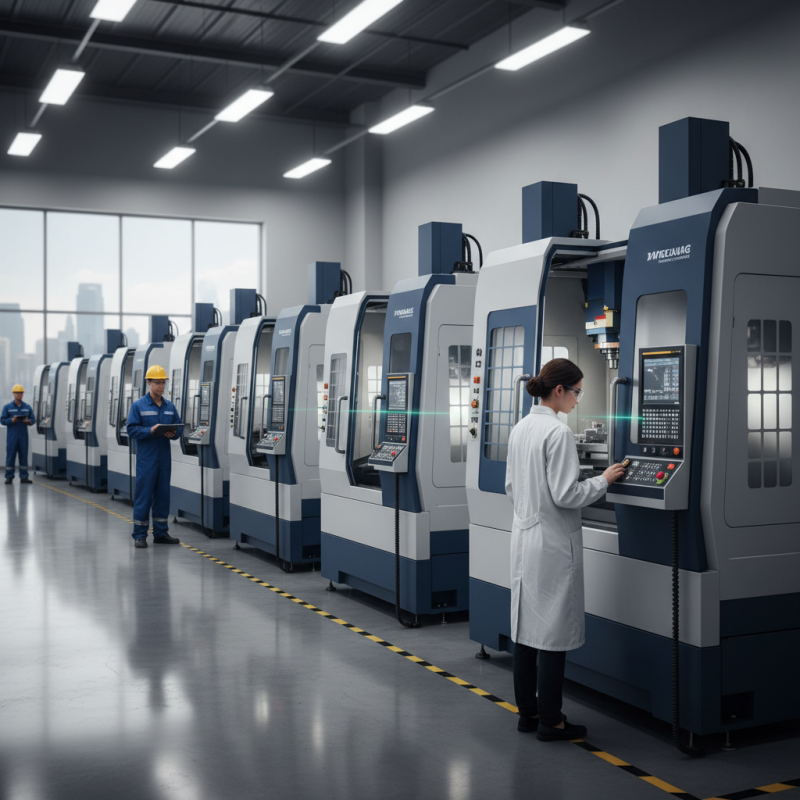
Top VMC Machines for Precision Manufacturing in China's Market
The precision manufacturing sector in China is rapidly evolving. According to a recent industry report, the market reached over $15 billion in 2022, reflecting a 14% growth. Vertical Machining Centers (VMCs) are at the core of this automation trend. They provide high accuracy and efficiency for machining parts in various industries, including automotive and aerospace.
In China’s competitive landscape, selecting the right VMC machine can be challenging. Many manufacturers prioritize features like spindle speed, bed size, and control systems. Industry statistics reveal that around 40% of production failures stem from inadequate machinery. This underlines the importance of investing in quality VMCs. A notable aspect is that about 30% of operations may require upgrades within five years, reflecting the technology’s rapid advancement.
Some manufacturers report that machine downtimes can last weeks. This highlights potential flaws in maintenance strategies. While the machines are designed for precision, the actual performance can vary significantly based on operator skills and environmental factors. Flexibility and adaptability become crucial for maximizing efficiency in this fast-paced environment.
China Top 10 VMC Machines for Precision Manufacturing
| Model |
Type |
Max Travel (X×Y×Z mm) |
Spindle Speed (rpm) |
Tool Capacity |
Weight (kg) |
| Model A |
Vertical |
800×500×500 |
10000 |
24 |
2000 |
| Model B |
Vertical |
1000×600×600 |
12000 |
30 |
2500 |
| Model C |
Horizontal |
1200×800×600 |
8000 |
40 |
3000 |
| Model D |
Vertical |
1500×1000×800 |
15000 |
50 |
3500 |
| Model E |
Vertical |
900×600×500 |
11000 |
20 |
2200 |
| Model F |
Vertical |
1000×700×600 |
12000 |
30 |
2700 |
| Model G |
Horizontal |
1300×900×700 |
10000 |
45 |
3100 |
| Model H |
Vertical |
800×500×500 |
13000 |
20 |
2100 |
| Model I |
Vertical |
950×650×550 |
12500 |
30 |
2400 |
| Model J |
Horizontal |
1250×800×600 |
9000 |
35 |
3200 |
Key Specifications of Leading VMC Machines for High-Precision Work
When it comes to precision manufacturing, vertical machining centers (VMC) are essential. These machines offer various specifications to meet high-demand standards. The key features often include
spindle speed,
tool capacity,
and overall work envelope size. High spindle speeds allow for quicker cutting, while larger tool capacities increase versatility in production.
Additionally, rigidity and stability are critical for achieving precision. The machine's frame material plays a vital role in this aspect.
Cast iron is commonly preferred for its vibration-dampening properties.
Some VMC machines also feature advanced cooling systems. These systems help maintain optimal temperatures during operation, ensuring consistent machining quality.
However, not all machines perform flawlessly out of the box. Some users may encounter issues with calibration and setup. This can lead to subpar results if not addressed.
Regular maintenance and operator training are often overlooked but essential for maximizing machine performance.
Potential buyers should weigh these factors carefully.
Comparative Analysis of VMC Machines Based on Industry Applications
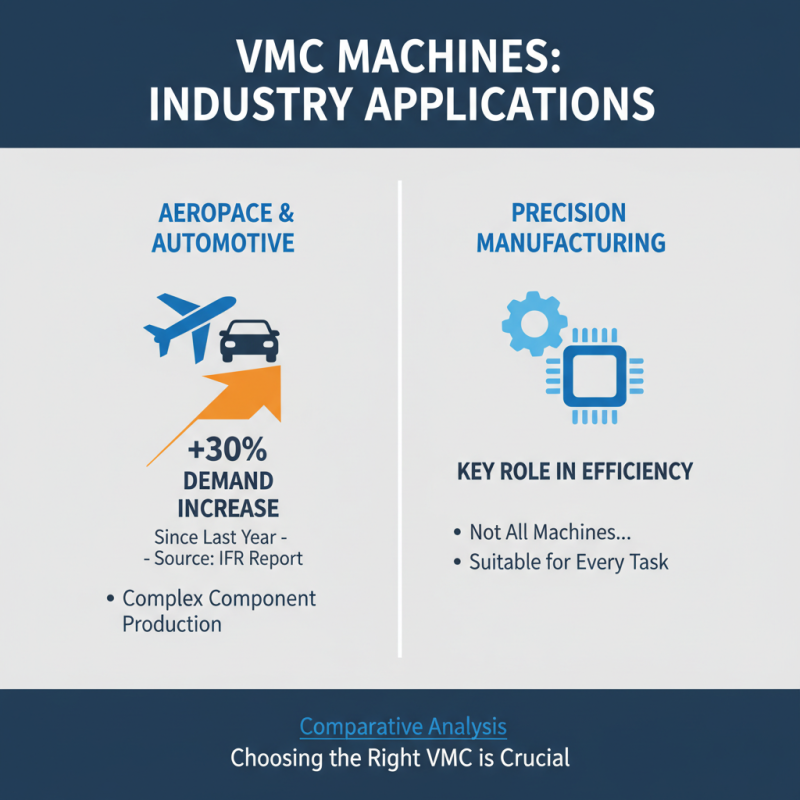
When analyzing VMC machines for precision manufacturing, industry applications vary significantly. According to a recent report by the International Federation of Robotics, the demand for VMC machines in sectors like aerospace and automotive has risen by over 30% since last year. These machines play a vital role in producing complex components efficiently. However, not all machines are suitable for every task.
The production of precision parts often requires machines with a specific range of capabilities. For example, in the aerospace industry, VMC machines must handle tight tolerances. Reports suggest that 40% of aerospace manufacturers find existing machines inadequate for their precision needs. Many manufacturers are now investing in upgrades or new technology to address these gaps. In contrast, the automotive industry often prioritizes speed and flexibility, which can lead to different machine choices. The result? A mixed market where specialization is essential.
Additionally, a survey of manufacturers indicates a notable trend: over 50% experienced delays due to machine limitations. These reflections underline the importance of careful selection based on application. Not every VMC machine meets the diverse requirements of modern manufacturing. This suggests room for improvement in aligning technology capabilities with industry-specific needs. The journey toward optimal precision is ongoing.
Evaluation of Cutting Tools and Technology Used in China's VMCs
Precision manufacturing in China relies heavily on advanced VMC machines. These machines achieve tight tolerances and intricate designs. The choice of cutting tools is crucial for optimizing performance. High-speed steel and carbide tools are common. They offer durability and efficiency. However, finer tools can be costly and require regular replacement.
Technology used in VMCs includes intelligent systems for tool path optimization. These systems aim to enhance productivity and reduce cycle times. Some VMCs even integrate adaptive control. Yet, not all operators fully utilize these technologies. There can be a gap between potential and reality. Challenges such as skill levels and training persist.
Moreover, the cooling systems in VMCs influence tool life and accuracy. Effective cooling prevents overheating during operations. However, many setups still face cooling inefficiencies. This leads to premature tool wear. Reflection on these issues can guide improvements in process management. Manufacturers must address these obstacles to fully leverage VMC capabilities.
Market Trends and Future Projections for VMC Machine Production in China
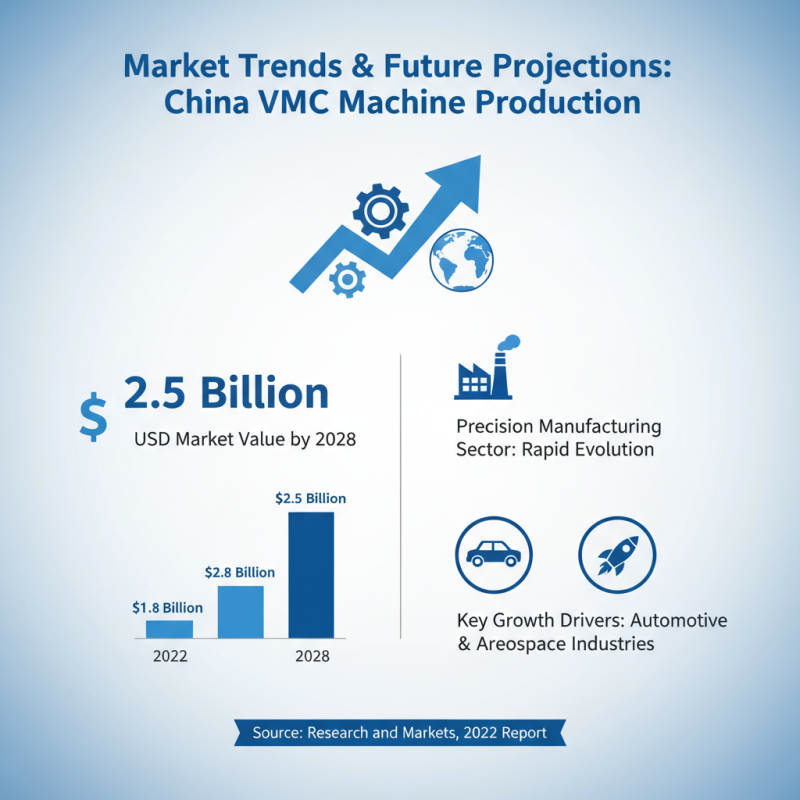
The precision manufacturing sector in China is evolving rapidly. The demand for vertical machining centers (VMC) is on the rise. According to a 2022 report by Research and Markets, the VMC market in China is projected to reach $2.5 billion by 2028. This growth is fueled by the automotive and aerospace industries, which require high precision and efficiency.
As technology advances, future projections show a shift towards automation and smart manufacturing solutions. Many manufacturers are focusing on integrating IoT into VMC systems. A McKinsey study highlighted that 30% of manufacturing tasks could be automated with current technologies. However, this raises concerns about workforce displacement. Companies need to strike a balance between automation and skilled labor retention.
Furthermore, sustainability is a pressing issue. The industry faces scrutiny over energy consumption and waste management. A report by the China Federation of Machinery Industry stated that 40% of energy in manufacturing is wasted. Addressing these challenges is crucial for sustaining growth. Manufacturers must invest in greener technologies and processes to meet international standards and consumer expectations.